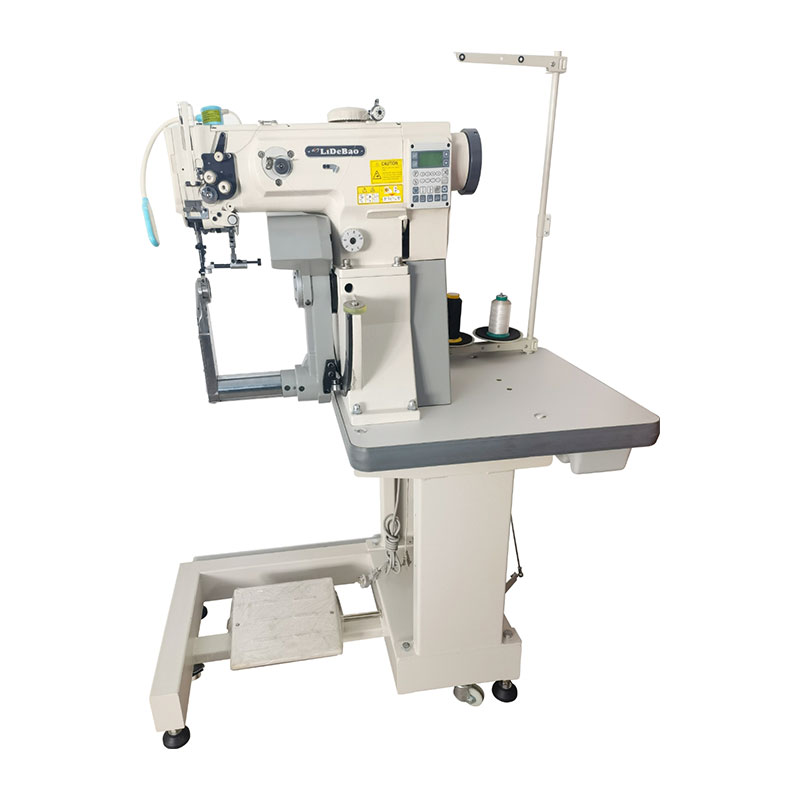
Sewing a leather bag is fundamentally different from sewing a piece of fabric. Leather is thick, stiff, and when multiple layers are stacked, can reach over 1 centimeter in thickness. Standard industrial sewing machines either cannot penetrate the material, produce poor stitch appearance, or skip stitches after a few seam inches.
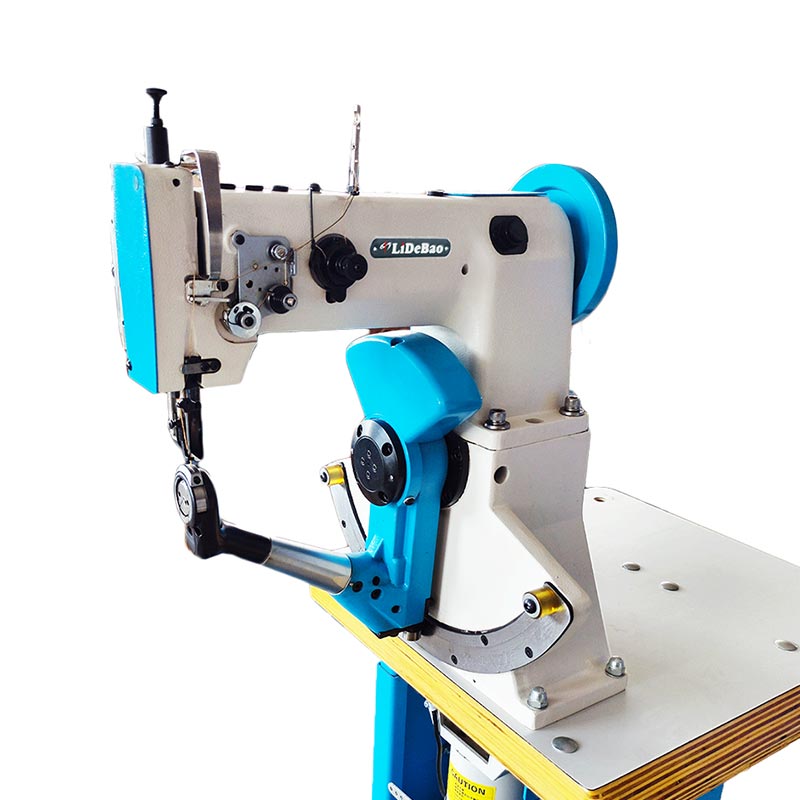
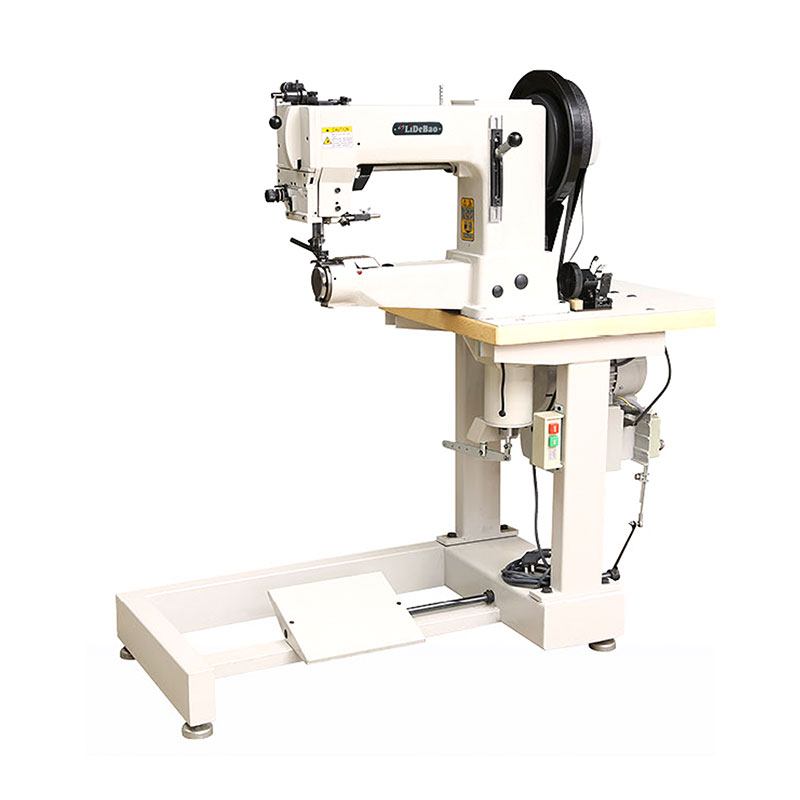
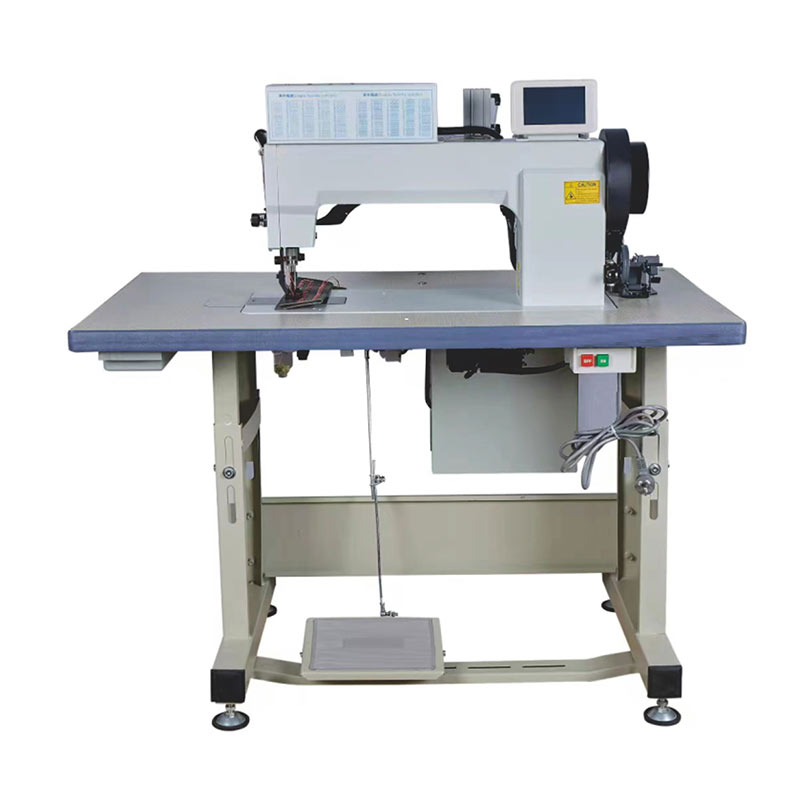
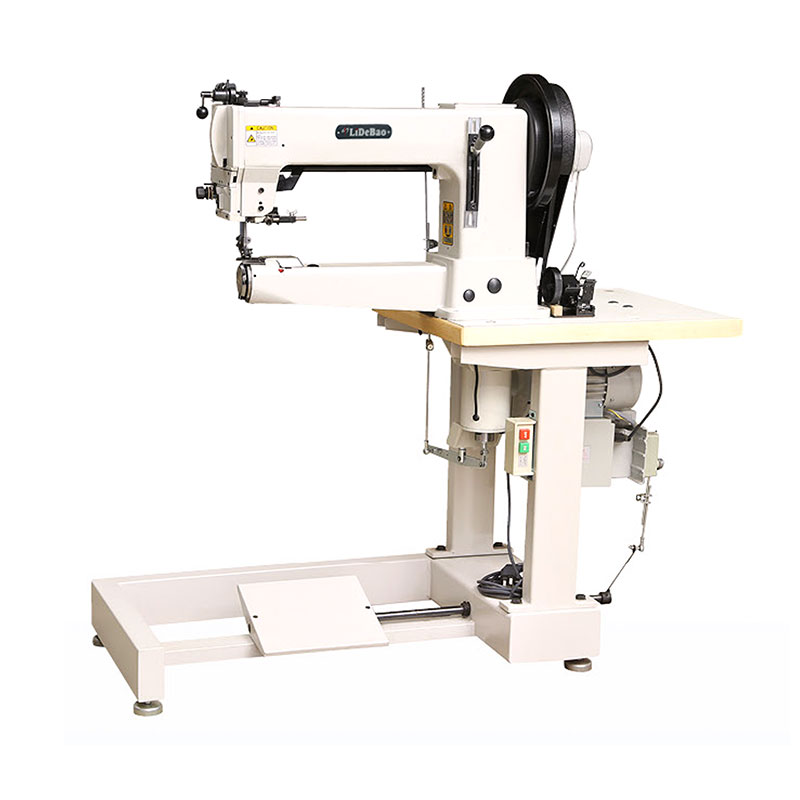
The leather bag sewing machine is purpose-built for this specific application. Its core mission is to form stable, clean, and durable stitches on leather — a material with high density and low stretch. Different bag styles, leather thicknesses, and seam locations (side panels, front panels, linings, external seams) impose different requirements on stitch length, presser foot lift height, and sewing speed.
Wenzhou Lidobao Machinery Equipment Co., Ltd. (lidebao®) was founded in 1999 by Mr. Xu Xiaobing, initially focusing on hand stitch sewing machines. In 2000, the company launched its first model, becoming one of the earliest domestic manufacturers of hand stitch sewing machines in China. The company was formally established in 2002. In 2004, R&D expanded to include buttonhole sewing machines, pocket welding machines, and side seam machines. In 2006, wool sewing machines were developed. Starting in 2012, the company ventured into heavy-duty and pattern sewing machines. The company is located in Wenzhou, the leather and leather shoe capital of China, specifically at the 2nd Floor, Building 22, Suifeng Second Industrial Zone, Xianyan Street, Ouhai District, Wenzhou City, Zhejiang Province. It specializes in special sewing machinery for footwear, leather, sofas, and automotive interiors. This article starts from the actual production scenarios of leather bag manufacturing and explains how to select a leather bag sewing machine, which stitching parameters matter, and common issues in batch production and equipment maintenance.
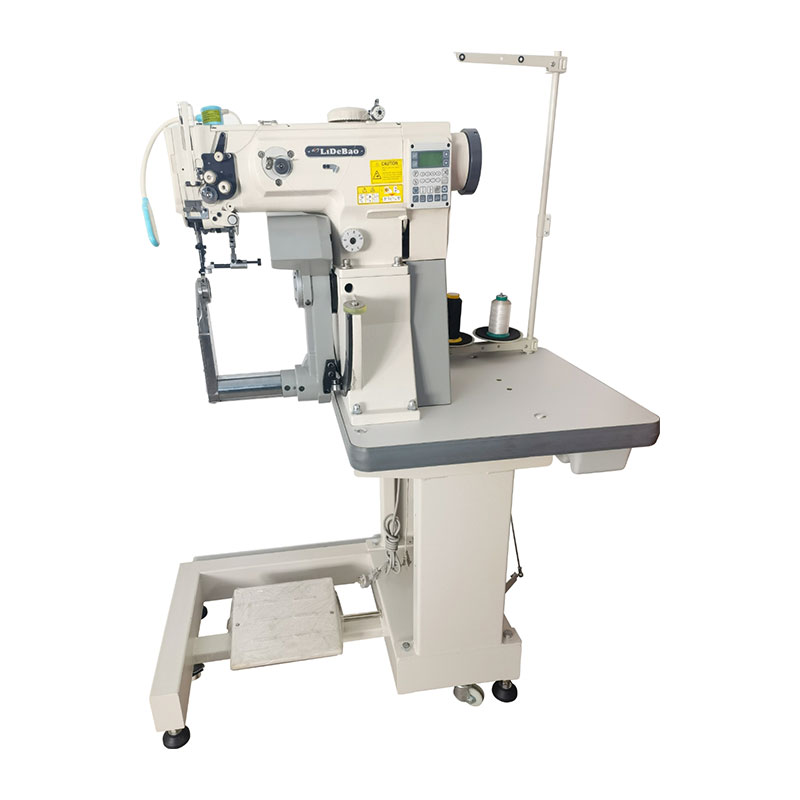
Among the production processes for leather bags, sewing is the most demanding in terms of joint strength. Adhesives only assist with positioning; what truly withstands the pulling, loading, and abrasion during bag use is the stitching. An unsuitable sewing machine leads to uneven thread tension, needle holes that weaken the leather, and crooked seam lines — defects that are directly visible on finished products.
A properly matched sewing machine delivers consistent stitch quality, uniform stitch length, and sufficient penetration power. For stitching side panel linings, external seams on bag fronts, and pocket openings, the machine must maintain consistent sewing results across different angles and curved surfaces.
From an efficiency perspective, dedicated machine models offer advantages over general-purpose models: they are optimized for specific seam positions, reducing the need for operators to repeatedly adjust presser feet, tension, or needle plates. Single-unit processing time can be reduced by 30% or more. In high-volume production, this difference directly affects line cycle time and delivery schedules.
Leather handbags / totes: Requires stitching of side panel linings, top opening edge seams, and handle-to-body attachments. These positions demand strong material feed capability and smooth transition between thicknesses.
Leather wallets / card holders: Small size, multiple layers, and numerous corners. The machine must maintain stable stitch formation over tight turning radii without stitch length variations.
Backpacks / rucksacks: Involves straps, zippered pockets, front panel decorative stitching, and other varied seam locations. A single machine may need to handle wide thickness variations.
Custom leather goods: Small batches, many variations, and complex curves. The machine requires flexible adjustability for quick changes to stitch length, sewing speed, and presser foot pressure.
A truly capable leather bag sewing machine is defined by several hard parameters, not simply by whether it can sew leather at all.
The following table shows representative specifications for the lidebao® leather bag sewing machine series:
| Parameter | Typical Range | Note |
|---|---|---|
| Needle bar stroke | 30 – 45 mm | Larger stroke accommodates thicker materials |
| Maximum stitch length | 6 – 12 mm | Topstitching uses longer stitches; understitching uses shorter |
| Maximum sewing thickness | 8 – 15 mm | Depends on machine configuration |
| Presser foot lift height | 12 – 20 mm | Allows insertion of multi-layer leather stacks |
| Sewing speed | 800 – 2,000 stitches/min | Leather machines typically slower than fabric machines |
| Hook type | Large hook / Double-capacity hook | Larger bobbin capacity reduces bobbin changes |
| Material feeding system | Bottom feed / Needle feed / Compound feed | Selected based on thickness and material type |
| Needle position | Single needle / Double needle | Double needle for parallel seam stitching |
The table shows that the specifications of a leather bag sewing machine differ significantly from those of a standard industrial lockstitch machine. A standard machine typically has a maximum stitch length of 5 mm, while leather topstitching for decorative effect may require 8-12 mm. In terms of sewing thickness, a standard machine handles 1-2 layers of denim, while a leather machine must penetrate 8 mm or more of stacked leather.
In leather sewing, the feeding system directly affects stitch quality and prevents layer shifting. The three main feeding systems differ as follows:
For most leather bag production scenarios, needle feed or compound feed are the better choices. Bottom feed is suitable only for thin leather or applications with low seam quality requirements.
In leather bag sewing, frequent bobbin changes interrupt production rhythm. A standard hook has limited bobbin capacity — after sewing a moderately long seam, the operator must remove the bobbin case and rewind the bobbin. A large hook or double-capacity hook holds 1.5 to 2 times more thread than a standard hook, significantly reducing the frequency of bobbin changes.
For operations requiring continuous long seams (such as sewing the entire perimeter of a bag side panel), the efficiency gain from a large hook is very noticeable. Operators stop less frequently, the sewing process is more continuous, and stitch consistency improves.
The sewing speed of a leather machine is typically lower than that of a fabric machine. This is not a technical limitation but a requirement of the material itself. At high sewing speeds, the friction of the needle entering the leather generates heat. Excessive heat hardens or even burns the leather around the needle holes. 800-2,000 stitches per minute is a reasonable speed range for leather sewing, with the exact value depending on leather thickness and type.
Penetration power primarily depends on needle bar stroke and needle specification. A larger stroke provides greater momentum and torque as the needle enters the material, allowing penetration of thicker materials. For extremely thick leather (such as saddle leather or vegetable-tanned leather), a dedicated heavy-duty model may be required.
One of lidebao®'s core strengths is customization. The factory can adjust the following parameters based on specific customer production requirements:
Additionally, the company offers private labeling (OEM/ODM) services, allowing customer branding on the equipment.
In actual production, the following issues occur most frequently:
lidebao® has over 22 years of manufacturing experience in industrial sewing machines. Starting with hand stitch machines in 1999, the company expanded to buttonhole machines, pocket welting machines, side seam machines, wool sewing machines, and then to heavy-duty pattern machines and leather sewing machines. This evolution reflects a deepening understanding of sewing technology.
The company operates advanced CNC machining centers and wire cutting equipment for in-house precision parts production. Independent research and production capabilities mean greater control over critical component quality and enable customization.
Regarding certifications, lidebao® equipment holds CE certification, meeting EU market safety and quality requirements. Products are exported to over 30 countries, with long-term partnerships established with clients.
The company is located in Wenzhou — a major production base for leather and leather shoes in China. This geographic advantage provides proximity to key customer groups, enabling rapid response to market demands. The mature local leather processing industry also facilitates equipment testing and process validation.
Leather bag sewing machines typically cost more than standard industrial sewing machines. The difference comes from specialized design, heavier construction, and higher manufacturing precision. However, for factories whose primary product is leather bags, this investment is an essential part of production capability.
From a total cost perspective, a properly matched leather-specific sewing machine delivers several benefits: lower defect rates (reducing costly leather waste from sewing defects), higher production efficiency (less adjustment and downtime), and more consistent product quality (enhancing brand reputation). These benefits accumulate over the long term in batch production.
For companies entering leather bag manufacturing, starting with one versatile single-needle leather sewing machine and gradually adding specialized models as product lines and processes develop is a practical approach. For established factories with defined product lines, directly selecting machines optimized for specific operations yields clearer long-term returns.
How thick can a leather bag sewing machine sew?
This varies by model, with a typical range of 8 to 15 mm. Customized machines can handle thicker stacks. Select the specification based on the maximum stack thickness in actual production.
Can a standard industrial sewing machine sew leather?
It can sew very thin leather (1-2 mm), but stitch quality, penetration power, and long-term reliability are inferior to a dedicated leather machine. For leather thicker than 3 mm, a standard machine is generally incapable.
Why does leather sewing frequently skip stitches?
The most common cause is an incorrect needle type. Leather sewing should use round-point or specialized leather needles, not standard sharp-point needles. Sharp-point needles tend to deflect when entering leather, resulting in unstable loop formation. Additionally, excessive sewing speed increases skip-stitch probability.
How should a leather bag sewing machine be maintained?
Clean leather dust and lint from the feed dog and hook area daily. Check weekly whether the needle is bent or dull (recommend replacing needles every 8 operating hours). Apply specialized lubricating oil to critical moving parts monthly. Calibrate the gap between hook tip and needle semi-annually.
Does lidebao® support equipment customization?
Yes. The company has independent R&D and production capabilities and can customize needle bar stroke, stitch length, sewing thickness, and other parameters based on specific customer product requirements, while also offering private labeling (OEM/ODM) services.