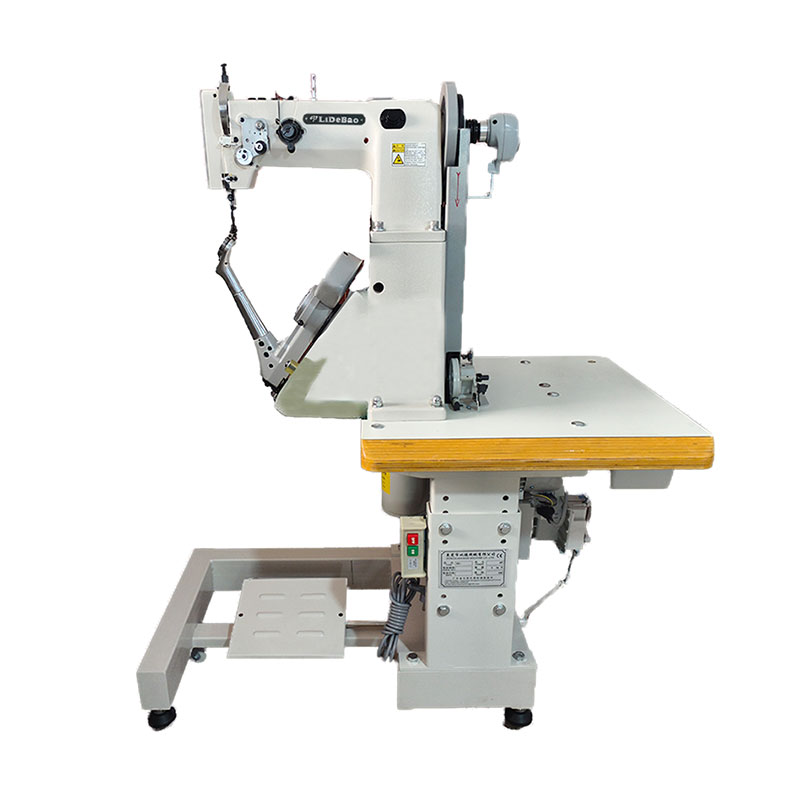
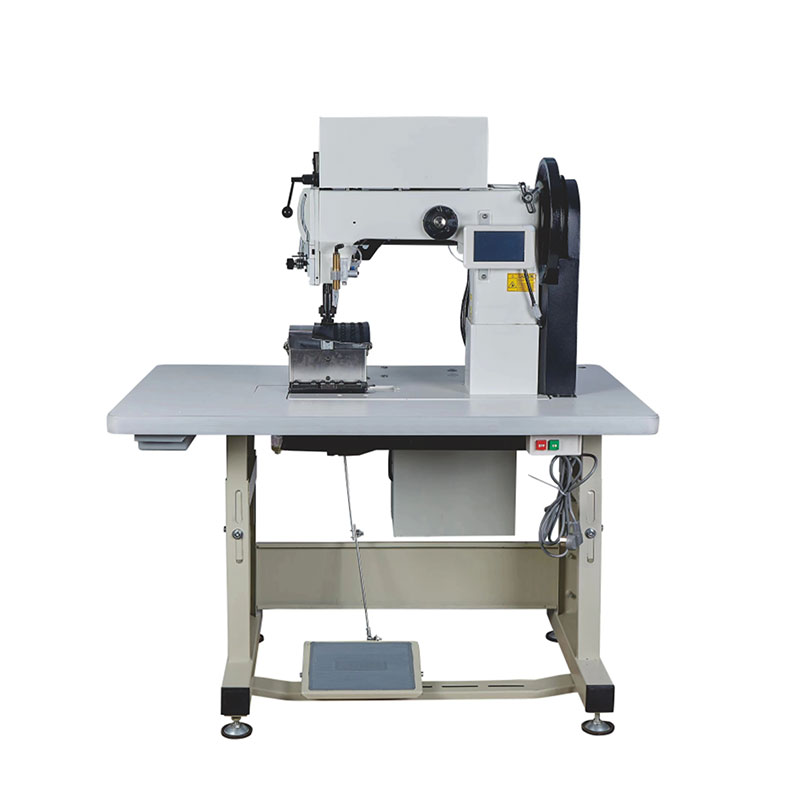
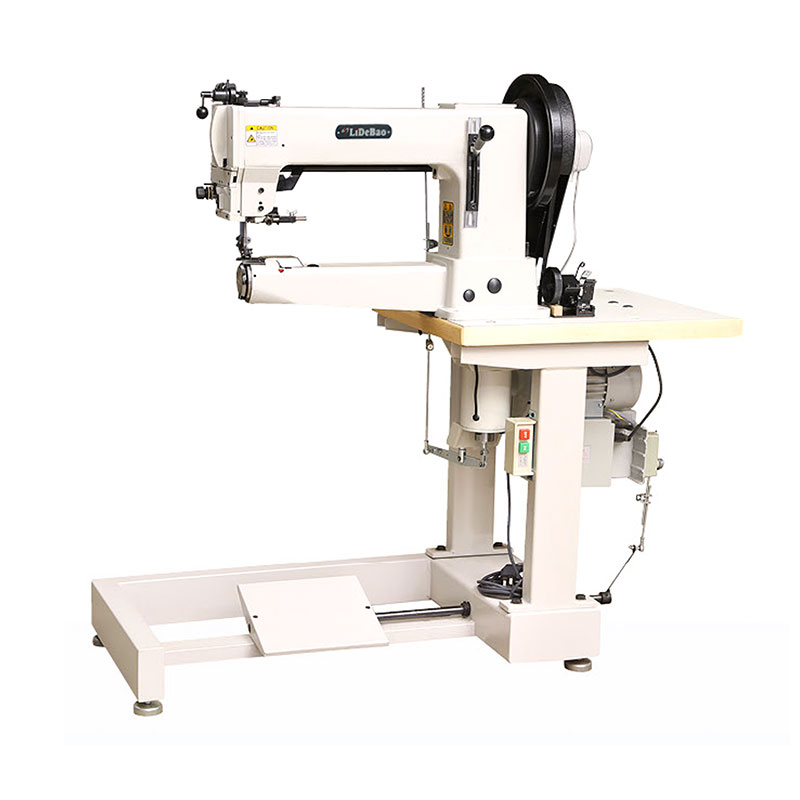
The leather goods industry is changing as manufacturers place greater emphasis on stitching accuracy, material handling, product consistency, and production flexibility. A Leather Bag Sewing Machine is designed for sewing operations where leather, synthetic leather, fabric, and other layered materials require controlled and stable stitching. Compared with general-purpose sewing equipment, specialized machinery can be better suited to the construction characteristics of bags, cases, and other leather products.
As bag designs become more diverse, sewing equipment needs to accommodate different shapes, material thicknesses, seam positions, and construction methods. This has increased the importance of specialized machinery in leather goods manufacturing. Equipment selection is no longer based only on sewing speed. Factors such as stitch stability, machine structure, material compatibility, operator control, and suitability for continuous production also influence the overall manufacturing process.
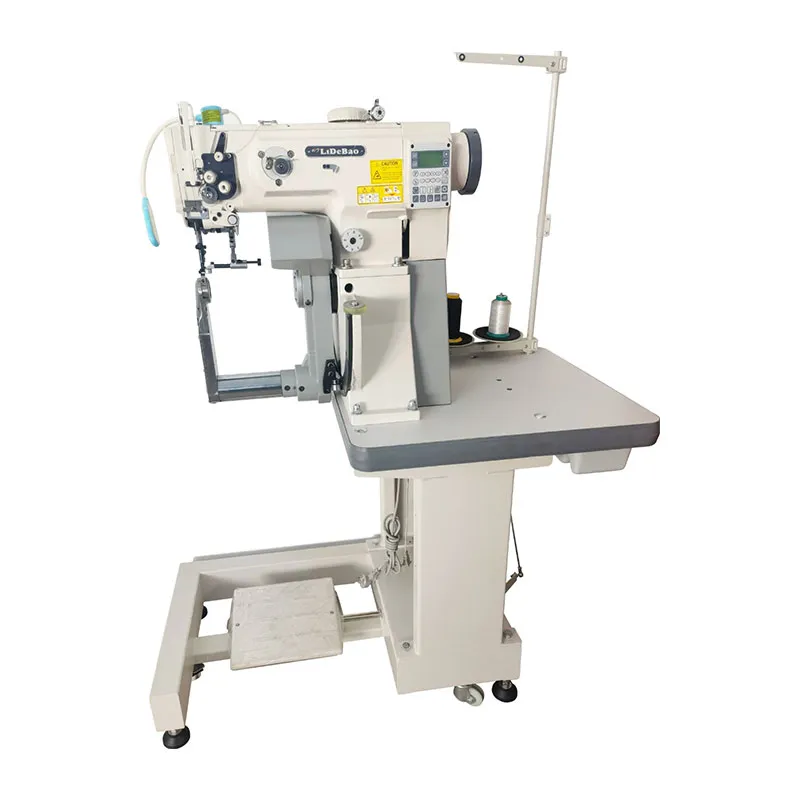
Leather bags are assembled through multiple sewing operations. Panels, handles, pockets, gussets, linings, reinforcement sections, and decorative components may require different stitching approaches. Each operation can place different demands on the equipment, particularly when several layers of material are joined together.
Leather also behaves differently from many lightweight textile materials. Its thickness, surface characteristics, stiffness, and resistance to needle penetration can affect sewing performance. A machine intended for leather applications therefore needs to provide appropriate mechanical control and stable material feeding. This helps operators maintain a consistent seam while working with different sections of a finished product.
Leather varies considerably between products and applications. Natural leather may have different levels of softness, thickness, and surface texture, while synthetic leather can also vary according to its construction. Bags may combine outer leather with lining materials, reinforcement layers, or other components, creating different sewing conditions within the same production process.
Specialized equipment allows manufacturers to consider these material differences during production. Stable feeding and controlled needle movement can help reduce irregular stitches and improve seam formation. Proper machine adjustment remains important because the same configuration may not be suitable for every material or product structure.
For factories producing multiple bag styles, operational flexibility is particularly useful. Equipment that can accommodate changes in material and sewing requirements can help reduce unnecessary adjustments between different production tasks.
Sewing quality is influenced by several interconnected factors. Machine condition, thread selection, needle compatibility, material positioning, operator technique, and sewing parameters all contribute to the final result. A reliable manufacturing process therefore requires more than simply selecting suitable equipment.
| Production Factor | Importance in Manufacturing |
|---|---|
| Material handling | Supports stable movement of layered leather and related materials |
| Stitch formation | Contributes to seam consistency and product appearance |
| Mechanical stability | Helps maintain dependable operation during repeated sewing tasks |
| Operator control | Allows adjustments according to different product structures |
| Maintenance condition | Supports consistent machine performance over continued operation |
Uniform stitching is important for both the structural integrity and visual appearance of leather bags. Uneven stitches can affect the appearance of a seam and may also influence the strength of the connection between components. Stable mechanical movement and appropriate machine adjustment help operators maintain more consistent sewing results.
Consistency becomes particularly important when products are manufactured in batches. When each component follows the same sewing standard, subsequent assembly operations can become easier to manage. Consistent stitching can also help manufacturers maintain a uniform appearance across different products within the same collection.
Leather bags can include curved edges, narrow sections, corners, overlapping panels, and reinforced areas. These structures require careful positioning during sewing. The operator must control both the material and the sewing path while maintaining an appropriate seam allowance.
Specialized sewing machinery can support these operations by providing a mechanical structure suitable for the characteristics of leather goods production. The exact machine configuration depends on the construction method and material combination used in a particular product. This makes application knowledge an important part of equipment development and selection.
The development of sewing machinery is closely connected with changes in the leather goods industry. Manufacturers are seeking equipment that can support more varied product designs while maintaining stable production processes. This has encouraged machinery companies to invest in research and development covering mechanical structures, sewing functions, material handling, and application-specific equipment.
Modern production does not necessarily mean replacing every traditional process with automation. Instead, manufacturers often combine specialized machinery with experienced operators. The machine provides mechanical consistency, while skilled personnel manage material positioning, product characteristics, and process adjustments. This combination can be especially useful for leather bags, where different sections may require different handling methods.
Leather goods factories often produce multiple models rather than a single standardized product. A production line may need to move between different bag sizes, materials, structures, and stitching requirements. Equipment flexibility can therefore have a direct influence on manufacturing efficiency.
At the same time, excessive adjustment can interrupt production and make process control more difficult. Machinery development increasingly focuses on finding a practical balance between adaptability and stable operation. Manufacturers can benefit from equipment that is sufficiently flexible for their product range while maintaining predictable sewing performance.
This approach is particularly relevant for specialized manufacturers serving different segments of the leather goods market. Equipment should be considered as part of the complete sewing process rather than as an isolated production tool.
Specialized sewing machinery can be used across a broad range of leather product applications. Leather handbags, travel bags, cases, wallets, accessories, and other sewn goods may require different combinations of material handling and stitching processes. The appropriate equipment depends on the construction and production requirements of each application.
Bag manufacturing commonly involves several stages, including material preparation, component positioning, seam sewing, reinforcement, edge treatment, lining assembly, and final inspection. Sewing equipment plays an important role in connecting these stages because the quality of individual seams can affect later assembly operations.
Fashion-oriented leather bags often place strong emphasis on clean seam lines and consistent construction. Decorative stitching may also form part of the product design. Equipment used in these applications needs to support accurate material positioning while allowing operators to follow the intended sewing path.
For products with changing styles and small production batches, adaptability can be particularly useful. Manufacturers may need to change materials or sewing configurations more frequently than factories focused on highly standardized products. Specialized equipment can help accommodate these variations when properly configured.
Travel bags and utility products may place greater emphasis on structural strength because their components can be exposed to repeated loading and handling. Reinforced seams, handles, attachment areas, and layered sections may require controlled sewing performance.
The production process for these products can involve thicker material combinations than those found in lightweight fashion accessories. Appropriate machine selection and adjustment can help operators maintain stable stitching when working with demanding sections of the product.
Continuous research and development is an important part of sewing machinery manufacturing. Different industries present different technical requirements, and equipment manufacturers need to understand these requirements before developing suitable machine structures. Experience accumulated through practical applications can provide valuable knowledge for improving future equipment.
Research may involve mechanical design, sewing mechanisms, material handling, structural durability, and application-specific functions. The objective is not simply to create more complicated equipment, but to develop machinery that addresses practical manufacturing conditions.
Experience with different sewing applications can help manufacturers identify recurring production challenges. Leather goods production, for example, may involve material thickness changes, layered components, curved seams, and reinforced sections. Understanding these conditions allows machinery developers to refine equipment according to actual manufacturing needs.
Independent research capabilities can also help a company respond to changing industry requirements without relying entirely on existing equipment concepts. Over time, this can contribute to a broader product range and more specialized solutions for different sewing applications.
Selecting suitable sewing machinery requires an understanding of the complete production process. Manufacturers should consider the materials used, product structure, seam requirements, expected production conditions, operator skills, and maintenance practices. A machine that performs well in one application may not necessarily be the best choice for another.
Before introducing new equipment, production teams can evaluate representative materials and typical product components. Testing can help determine whether the machine provides appropriate material feeding, stitch formation, and operator control. It can also reveal whether additional process adjustments are required before regular production begins.
| Consideration | Production Relevance |
|---|---|
| Material type | Determines suitable sewing conditions and machine configuration |
| Product construction | Influences access, seam direction, and handling requirements |
| Seam characteristics | Affect stitch formation and overall product appearance |
| Production workflow | Determines how equipment fits into the manufacturing process |
Equipment selection should be based on actual production conditions rather than general specifications alone. A manufacturer producing soft leather handbags may have different requirements from a factory making heavy-duty travel bags. Similarly, a workshop focused on customized products may value flexibility differently from a large production facility focused on standardized output.
Technical communication between the machinery manufacturer and the production team can therefore be valuable. Clear information about materials, product construction, sewing operations, and working conditions allows the equipment supplier to recommend a more appropriate solution.
Regular maintenance is essential for maintaining stable sewing performance. Sewing machines contain moving mechanical components that operate repeatedly during production. Wear, contamination, improper adjustment, or unsuitable consumables can gradually influence stitch quality and machine behavior.
Routine inspection can help identify potential issues before they affect production. Cleaning, lubrication where required, checking sewing components, and maintaining appropriate machine adjustments are basic elements of equipment management. Operators should also follow the maintenance requirements provided for the specific machine.
Even advanced machinery depends on proper operation. Operators need to understand how materials should be positioned, how sewing paths should be controlled, and how machine settings relate to different production conditions. Training can help reduce operational errors and improve consistency between different production shifts.
Experienced operators can also identify changes in sewing performance at an early stage. Unusual noise, irregular stitch formation, inconsistent material feeding, or changes in machine resistance may indicate that inspection or adjustment is necessary.
The leather goods industry is likely to continue requiring equipment that combines reliable mechanical performance with practical flexibility. Product diversification, changing material choices, and evolving manufacturing methods will continue to influence sewing machinery development.
Specialized equipment can support manufacturers by providing solutions designed around the actual characteristics of leather goods production. Rather than treating all sewing operations in the same way, application-specific machinery considers the differences between materials, product structures, and production processes.
This development also reflects a broader shift in industrial sewing. Manufacturers increasingly value equipment that can integrate into an existing workflow, support stable quality, and adapt to changing production requirements. Engineering experience and application knowledge are becoming increasingly important alongside basic machine performance.
Wenzhou Lidebao Machinery Equipment Co., Ltd. has developed its expertise through long-term involvement in sewing machinery research and manufacturing. The company began with the development of hand stitch sewing machines and gradually expanded its research into specialized equipment for different sewing applications. Its development path has included buttonhole sewing machines, pocket welting machines, side seam machines, wool sewing machines, heavy-duty sewing machines, and pattern sewing machines.
Through this accumulated experience, Lidebao has gradually focused its operations on specialized sewing machinery for shoes, leather products, sofas, automotive interiors, and related applications. This focus provides the company with practical knowledge of different material characteristics and sewing requirements.
Lidebao places emphasis on independent research and development as part of its approach to machinery manufacturing. Its experience across multiple specialized sewing applications provides a foundation for developing equipment according to practical industry requirements.
The company is based in Wenzhou, Zhejiang, an area closely associated with leather and footwear manufacturing. This industrial environment provides a relevant foundation for understanding the production conditions faced by manufacturers of leather goods and related products.
As the leather goods industry continues to develop, specialized sewing equipment will remain an important component of manufacturing. Stable stitching, material adaptability, mechanical reliability, and practical operation all contribute to a more consistent production process. With its long-term focus on specialized sewing machinery and independent product development, Wenzhou Lidebao Machinery Equipment Co., Ltd. continues to provide equipment solutions for manufacturers working with leather goods and other demanding sewing applications.